126 E Willow St, Harrisburg, SD 57032
Call (605) 699-0189
Fallcrest Portable Toilets logo FallcrestPortable Toilets
Home/Resources/How Many Portable Toilets Do I Need for My Event?
Guide

How Many Portable Toilets Do I Need for My Event?

The full calculation event organizers in the Sioux Falls area use — baseline ratios, the four adjustments that matter, and worked examples for real events.

Restroom capacity is the most common planning failure at outdoor events, and it is entirely avoidable with ten minutes of arithmetic. The math is not complicated; the trouble is that most organizers use total attendance when they should be using peak-hour attendance, and skip the adjustments that separate a comfortable event from a queue that people photograph.

This guide walks through the baseline, the adjustments and several worked examples, so you can arrive at a number you can defend to your committee.

Start with the baseline ratio

The widely used industry baseline is one standard unit per 50 attendees for an event lasting up to four hours. That assumes no alcohol, moderate weather, and attendance spread across the event window rather than concentrated.

AttendanceBaseline units (4 hours, no alcohol)
501
1002
2505
50010
1,00020
2,50050

Apply the four adjustments

  • Alcohol serviceAdd 15–25%. Alcohol increases both frequency and duration of use.
  • Event lengthAdd roughly 10% per additional two hours beyond four.
  • Hot weatherAdd 10–15%. Water consumption in July drives usage up sharply.
  • Food serviceAdd handwashing stations; expect higher restroom use with meals.

Peak hour, not total attendance

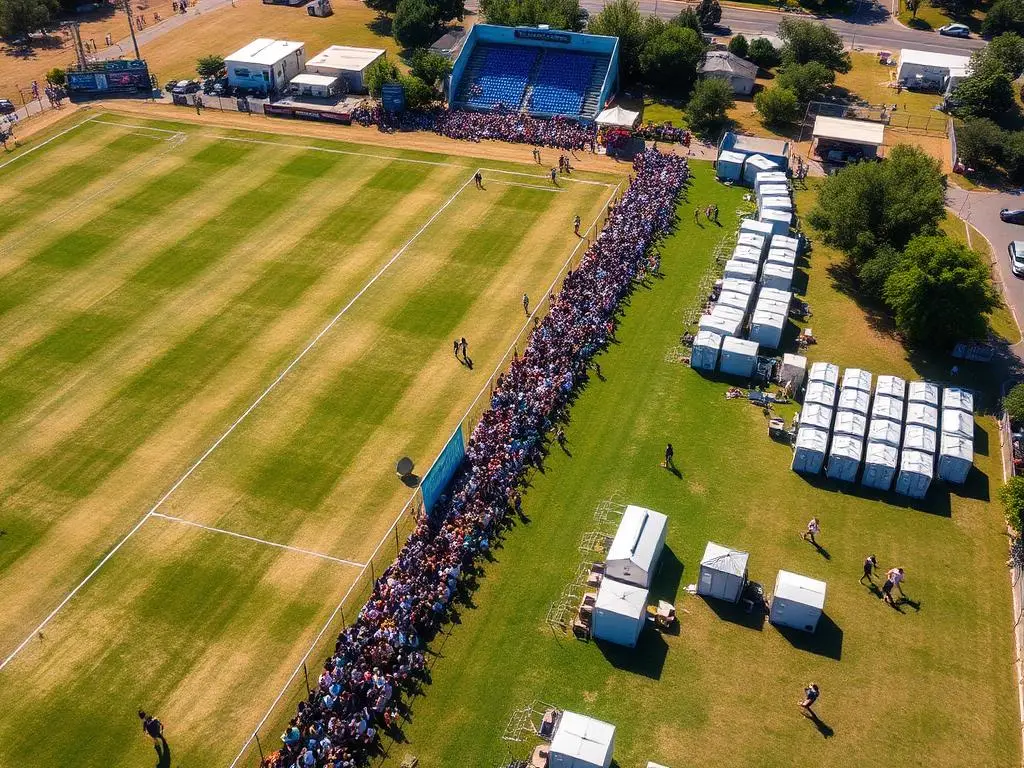
A festival that draws 2,000 people across a full day may never have more than 600 on the grounds at once. Sizing for 2,000 wastes money; sizing for the 600-person peak plus a margin is correct.

Conversely, a wedding reception with 150 guests has an extreme peak — nearly everyone uses facilities in the twenty minutes after dinner service ends. Same guest count, very different requirement.

Worked examples

  1. Community festival, 800 peak, 8 hours, beer gardenBaseline 16 units, +20% for alcohol, +10% for duration → 21 units, plus 2 ADA and 4 handwashing stations.
  2. 5K race, 400 runners plus spectators, 3 hoursBaseline 8 units concentrated at the start/finish, staged before the pre-race rush, plus 1 ADA unit.
  3. Church picnic, 200 guests, 4 hours, no alcoholBaseline 4 units, plus 1 ADA unit and 1 handwashing station near the serving line.
  4. Graduation open house, 120 guests over 5 hours, rolling attendance1–2 units is genuinely enough because guests arrive and leave in waves.
  5. Wedding reception, 150 guests, 6 hoursA 2-station trailer plus 2 standard units and 1 ADA unit to absorb the post-dinner peak.

Accessibility requirements

Plan at least one ADA accessible unit at any public event, and roughly one accessible unit per twenty standard units at larger events. Distribute them rather than grouping them, and make sure each sits on a firm, level approach that a wheelchair can reach without crossing turf or gravel.

This is the requirement organizers most often satisfy on paper and fail in practice — the unit is present, but it is at the far end of a grass field.

Placement and servicing for multi-day events

Split your units into two or three clusters rather than one wall. Distribute them along the guest path, downwind of food service, visible but not central, and always somewhere a truck can reach for servicing.

For anything longer than a single day, schedule an overnight or pre-gate service so day two starts fresh. Without it, capacity effectively drops as the weekend goes on.

Need this handled instead of researched? Call (605) 699-0189 and we will size and schedule the order for you.

Answers

Related Questions

Is one unit per 50 guests a rule or a guideline?

A guideline, and a reliable one for four-hour events without alcohol. It is a starting point that you then adjust for alcohol, duration, weather and the shape of your attendance curve.

Should I count staff and vendors in the total?

Yes. Vendors, volunteers and staff are on site the entire event, often longer than any guest, and they use facilities more than an average attendee.

What if attendance is unpredictable?

Size for your realistic high estimate and ask about adding units on short notice. Within the Sioux Falls metro we can often deliver additional units the same week.

Do I need handwashing stations?

Anywhere food is prepared or served, plan on them — health inspectors in this region routinely ask. One station per two to four restrooms is a workable ratio, weighted toward the vendor area.

How many units for a 100-person backyard party?

Two standard units for a four-to-six hour gathering. One is often adequate if guests arrive in waves and the house bathroom remains available.

Keep Reading

Related Guides

How Much Does It Cost to Rent a Portable Toilet in South Dakota?

How Much Does It Cost to Rent a Portable Toilet in South Dakota?

Rental length, unit type, service frequency and delivery distance drive nearly every quote. Here is how each one moves the number so you can budget accurately before you call.

Read the guide →
Portable Toilet Rental Guide for Construction Sites

Portable Toilet Rental Guide for Construction Sites

A contractor-focused guide to jobsite sanitation: how many units your crew needs, where to place them, how service schedules should work, and how to keep them usable in winter.

Read the guide →
How Long Can You Rent a Portable Toilet?

How Long Can You Rent a Portable Toilet?

There is no maximum rental period. This guide explains how weekend, monthly and long-term rentals differ in structure, service and cost per week.

Read the guide →

Get a Quote for Your Project

Delivery, service and pickup handled by a local crew. Call any hour.

Call Now