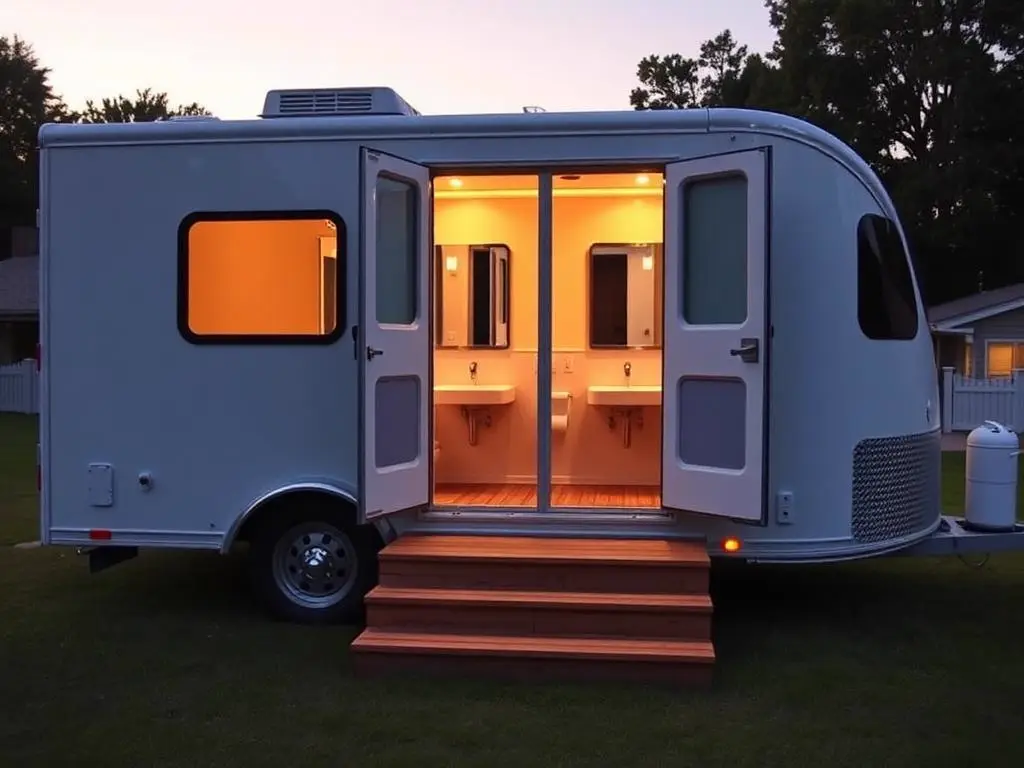
A restroom trailer is a different category of equipment. Guests step up into an enclosed, finished interior with individual stalls, a porcelain or composite sink with running water, a mirror, overhead lighting and a heating or cooling system. For most people, the experience is indistinguishable from a well-kept indoor restroom, which is the entire point.
Trailers are what we recommend for weddings, corporate hospitality, donor events, and any gathering where guests are dressed up or the weather will be extreme. In an August heat wave or an October evening in South Dakota, climate control stops being a luxury and becomes the reason people stay at your event.
Trailer configurations
Trailers are described by station count — the number of independent restrooms inside. Larger units add stalls and sometimes separate entrances for men's and women's sides.
| Configuration | Typical guest range | Best for |
|---|
| 2-station | Up to about 150 guests | Weddings, backyard receptions, small corporate outings |
| 3- to 4-station | 150–300 guests | Larger weddings, company picnics, fundraising events |
| Multiple trailers | 300+ guests | Festivals with VIP areas, large corporate functions |
Site requirements you need to know before booking
Trailers are the one product in our lineup with real setup requirements, and they are worth understanding before you commit to a spot on the property.
- A reasonably level pad — trailers are leveled with jacks, but a steep slope will not work
- Access for a truck to back the trailer into place, with a turnaround
- Standard 110V power within reach, or a generator arranged in advance
- A garden hose connection if available; otherwise we fill the fresh water tank on delivery
- Clearance for the entry steps and, where required, an accessible ramp
Power, water and waste in plain terms
The trailer carries fresh water for the sinks and flushing, and a separate waste tank for everything that goes down. Power runs the lighting, water pump, and heating or air conditioning. If the site has no outlet within extension-cord range, a quiet generator is the standard solution and should be part of the quote rather than a day-of scramble.
For multi-day events we schedule a service visit to pump waste and refill fresh water. Skipping that on a three-day event with a full guest list is the single most common reason a trailer stops performing.
Climate control and seasonal use
Air conditioning matters more than couples expect at a July reception, and heat matters more than anyone expects at a late-September evening event on the prairie. Both are standard on our trailers, and both depend on power being available for the entire event, not just the setup.
We generally advise starting the climate system an hour before guests arrive so the interior is comfortable from the first use.
What drives trailer pricing
Station count is the biggest factor, followed by the length of the rental, distance from Harrisburg, whether a generator is needed, and whether you want an attendant on site. Peak Saturdays in summer carry premium demand simply because there are a limited number of trailers in this region.
Because setup is more involved than a standard drop, we confirm site details before quoting rather than after. It saves everyone a difficult conversation on the day of the event.